Retirement is a different game. You’ve spent decades building wealth. Now comes the harder part - turning it into a paycheck that lasts. I’m Jesse Cramer. I help DIY investors turn their savings into a clear, cohesive retirement plan. Join 4000+ weekly readers and 20,000+ podcast listeners.
When "0% Tax" Is Terrible Advice 🤡
|
Good morning! Today's email includes... A cautionary tale about the 0% capital gains tax A big change in opinion about target-date funds. And articles on car costs, lowering birthrates, and "retirement date windows"... When "0% Capital Gains Tax" is Terrible AdviceTime for another cautionary tale! A client sent me this video last week, along with the question: “Is this legit – or fake news?“ Here's why $3,227,500 is the perfect number to retire early, especially for couples ♬ original sound - Johnefinance | John Eringman - Johnefinance | John Eringman If you don’t have time to watch it, the creator (John) suggests that a retired couple can have $3.23 million in their portfolio, withdraw exactly 4% per year (~$130K), and never pay taxes on it. My response to my client: He is making a major tax law mistake. There is a kernel of truth to what he’s saying. But it’s mostly bad advice. Online financial content is a “buyer beware” landscape.
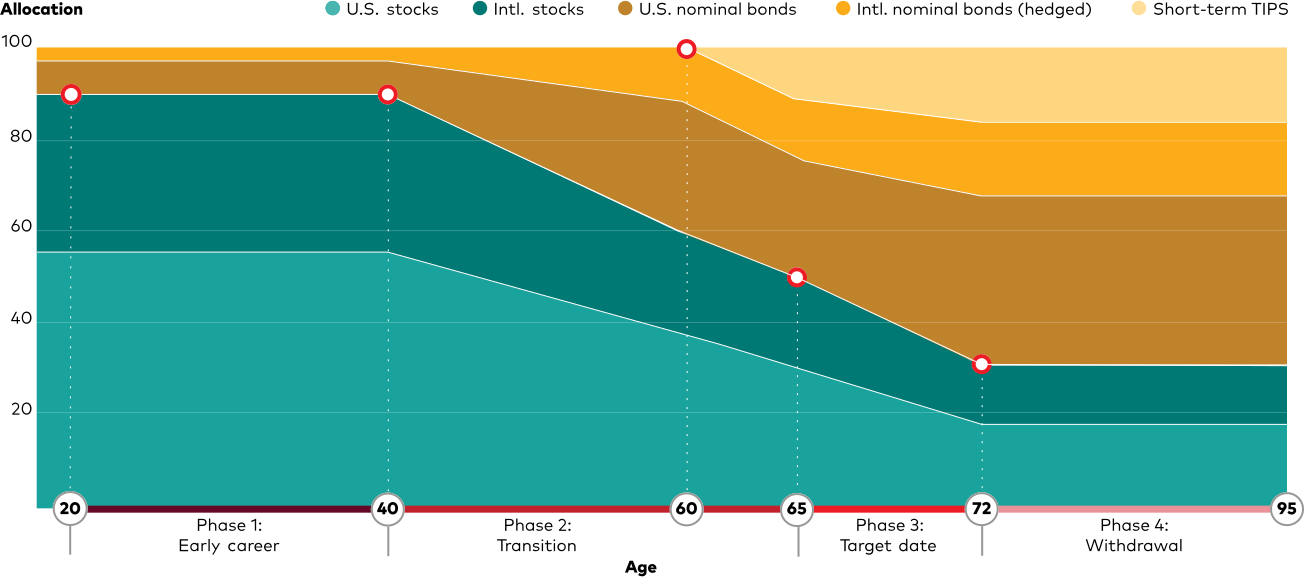
Target Date Funds: More Flawed Than AdvertisedI've changed my mind about target date funds - and maybe you should, too? I learned a lot about target date funds 10 years ago. I filed them away as a perfectly fine solution in many situations. But I’ve changed my mind.
Given that $5 TRILLION of American investors’ dollars are in target date funds, it’s worth revisiting this topic. How big is $5 trillion? It's as if one-third of the entire American workforce had $100,000 each in target date funds. A lot of money for a lot of people. TDFs affect so many investors. If you’re curious to re-learn what I’ve re-learned, check out Episode 137 of “Personal Finance for Long-Term Investors,” available on all podcast players.
Top 3 of the WeekFrom Hanna Horvath: your car is costing you more than you think From The New York Times (paywall): rising costs are decreasing birth rates From Kitces: should more retirees consider a "retirement date window?" What Are *Your* Questions?My most popular episodes are the "ask me anything" episodes. Check them out here:
I'm collecting questions for AMAs 17 and 18. Looking for a Financial Planner?Retirement planning can be complex. But I help! If you'd like to learn more or explore working together, visit PlanWithJesse.com and fill out the form.
Until Next WeekThank you for reading, listening, and writing back. People like you send me questions every day. Go ahead! I'd love to hear from you.
Until next week, Jesse |


Jesse Cramer
Retirement is a different game. You’ve spent decades building wealth. Now comes the harder part - turning it into a paycheck that lasts. I’m Jesse Cramer. I help DIY investors turn their savings into a clear, cohesive retirement plan. Join 4000+ weekly readers and 20,000+ podcast listeners.
Good morning! Today's email includes... The latest "Ask Me Anything" episode - featuring opportunity costs, TIPS, and asset location. Why a small 10% difference can lead to infinite differences - in both health and wealth. Stop Eating!! It's Costing You BILLIONS! Well...that headline isn't quite true. Though some people like to frame "opportunity cost" as the monster sapping your very life-force. In this "Ask Me Anything" episode, I tackle (3) great retirement finance questions... First -...
Good morning! Today's email includes... The 14 biggest risks in retirement - and how to beat them. [Part 2 of a two-part series] A funny connection between investing and the weather - and our strange perceptions of both. The 14 Retirement Risks - and How to Beat Them In these two episodes, Jesse applies Charlie Munger's principle of inversion to retirement planning, arguing that instead of defining success alone, investors should first identify how retirement plans fail and then design...
Good morning! Today's email includes... The 14 biggest risks in retirement - and how to beat them. [Part 1 of a two-part series] A funny connection between investing and the weather - and our strange perceptions of both. The 14 Retirement Risks - and How to Beat Them In this episode, Jesse applies Charlie Munger's principle of inversion to retirement planning, arguing that instead of defining success alone, investors should first identify how retirement plans fail and then design strategies...